

How to Crack the SSC JE with Civil MCQ
To crack the Staff Selection Commission Junior Engineer (SSC JE) examination is a test that needs to be planned and practised. The Civil Engineering MCQs are the decisive point in the success of aspirants following the Civil engineering stream amongst all other. These are objective questions which not only to measure the knowledge of theory but also the capacity to perform the application of the concepts under pressure.
At EA Publications, we are in a position to identify the path of a Civil Engineering aspirant. We are committed to offering the best quality of study material, solved papers and quality expert-curated MCQ in the field of Civil Engineering in order to enable them to achieve their targets and goals through clarity and confidence. Here, in this blog we will discuss the process of tackling the SSC JE Civil exam efficiently, the importance of MCQ questions and how to crack them with practical tips.
Understanding the Importance of Civil Engineering MCQs
The SSC JE exam is a very competitive test where thousands of candidates around the nation are in a bid to get the few vacancies. The objective questions in the Civil stream are based on core concepts in the following areas: Building Materials, Structural Analysis, Strength of Materials, Soil Mechanics, Hydraulics and Irrigation, Environmental Engineering, Surveying, Transportation Engineering.
All questions in the exam are aimed to test his or her conceptual clarity, problem solving skillfulness, and precision. The exam is time-limited, and therefore, answering Civil Engineering MCQs in a time-bound manner is one of the primary points of maximising your score.
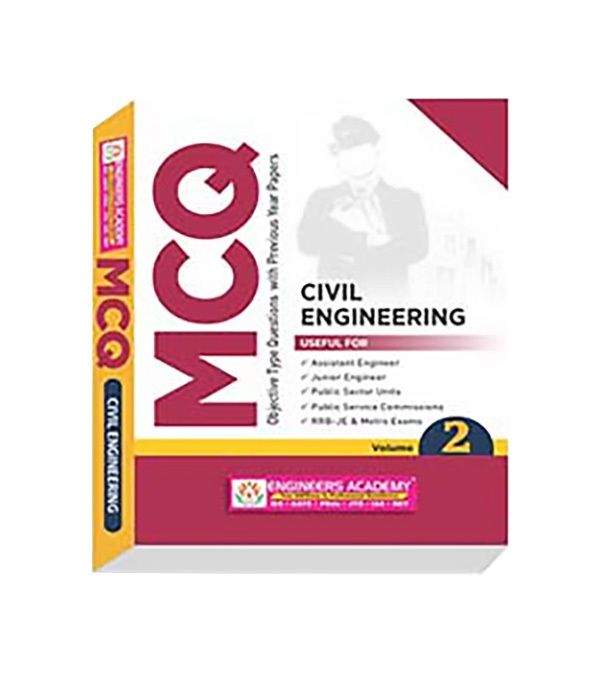
Step-by-Step Strategy to Crack SSC JE with Civil MCQs
1. Analyse the Exam Pattern and Syllabus
The initial one is the knowledge of SSC JE Civil exam structure. Paper I is composed of objective questions (200 marks) in General Intelligence, General Awareness and General Engineering (Civil). Of these, the Civil Engineering MCQs have the highest weightage.
Study the official syllabus and mark high-weight topics. Give priority to Building Materials, SOM, Soil Mechanics, Surveying, and Environmental Engineering because they tend to give much MCQ.
2. Strengthen Your Fundamentals
You should have a solid theoretical foundation before you enter into practice questions. Use of reference standard textbooks, class notes, and solved papers by EA Publications to develop good conceptual knowledge. In the absence of sound basics, MCQ solving becomes more of a guesswork than making an informed choice.
3. Regular MCQ Practice
Keep a daily MCQ-only Civil Engineering dedicated time. Start with sets of topics to train on single topics, and then continue to mixed mock papers. This slow transition gains momentum and assurance.
4. Time-Bound Mock Tests
When you feel at ease with single subjects, begin doing short-term mock exams of the whole length. Recreate the SSC JE test by making a 2-hour timer and solving 200 questions. Comparing your results after every test will point out the areas of weakness.
5. Learn from Previous Year Papers
The papers of the previous years serve as the best source to learn the style of questions in the SSC JE. The MCQ questions at EA Publications have detailed MCQ of civil engineering books, which contain solved past papers, and it is simple to ensure that applicants prepare according to the real trends of examinations.
How EA Publications Supports Aspirants
We are devoted to making EA Publications offer authentic, affordable and exam-oriented materials to students. We have a series on Civil Engineering:
- Topic-wise MCQ Books – Covering Building Materials, SOM, Soil Mechanics, Surveying, and more.
- Previous Year Solved Papers – With detailed solutions for better understanding.
- Practice Workbooks – Designed for speed and accuracy improvement.
- Online Resources -Practice sets that will help students find online assistance.
These resources used in combination will enable aspirants to prepare well-roundedly and give the best chance of cracking SSC JE.
Conclusion
There is no rote learning to crack SSC JE Civil but to crack it with smart and consistent preparation. The exams of civil engineering MCQs are the main pillars of the exam and discipline, clear conceptual understanding, and practice are the essential measures towards mastering the exam. Any aspirant can become a success with the right strategy, resources such as EA Publications MCQ Civil Engineering books and a commitment.
We at EA Publications believe in providing students with knowledge, guidance and practice tools that convert preparation into achievement. Are you serious about SSC JE, then start today with a systematic scheme of action and with a proper collection of MCQs, then your history of success will begin here.
FAQs
- Why are Civil Engineering MCQs important for SSC JE preparation?
Civil Engineering MCQs form the core of the SSC JE Civil paper. They test conceptual clarity, practical application, and quick decision-making. Since the exam is objective, accuracy in answering MCQ for Civil Engineering directly impacts your score.
- How can I effectively prepare MCQ for Civil Engineering?
Start by strengthening your fundamentals from standard textbooks. Then, practise topic-wise Civil Engineering MCQs daily, gradually moving to mixed mock tests. Referring to quality resources like EA Publications’ Civil MCQ books ensures exam-focused preparation.
- Are previous year Civil Engineering MCQs useful for SSC JE?
Absolutely. Previous year MCQs help you understand the exam’s pattern, frequently asked topics, and difficulty level. EA Publications provides detailed solutions to past papers, making it easier to learn concepts and avoid repeating mistakes.
- What is the recommended time of practicing MCQs a day regarding SSC JE Civil?
Ideally, spend 2- 3 hours per day and solve Civil Engineering MCQs. Consistency is even better than long study hours and thus a daily routine of practicing MCQs is important.
- What are the best resources to get Civil Engineering MCQ?
Aspirants may use genuine exam-oriented materials at EA Publications. The materials are not expensive, reliable and are to enhance conceptual knowledge and speed of solving problems.